
By LeoTheGreat, founder of SleepWellSpace.com · Last updated October 14, 2026
You’ve seen both fixes. One is a heavy panel of fabric that turns your bedroom into a cave. The other is a ten-dollar strip of fabric you can toss in a suitcase. Both promise a darker night, and both have fans who swear the other one is a waste of money.
So which one actually deserves your cash — and your forehead? The honest answer depends on where the light is coming from, who shares your room, and whether you sleep at home or on the road. This guide breaks down how each option works, where each falls short, and how to choose without buying twice.
Affiliate disclosure: This post contains affiliate links. If you buy through them, we may earn a commission at no extra cost to you.
The short answer
For most people sleeping at home, blackout curtains are the better first move, because they fix the room, and a dark room helps everyone in it. A sleep mask is the better pick if you travel, share a bedroom with someone on a different schedule, rent a place where you can’t hang anything, or sleep during the day.
If you want the darkest result possible — night-shift sleep or a bedroom facing a streetlight — using both is not overkill. It’s a common setup in exactly those situations.
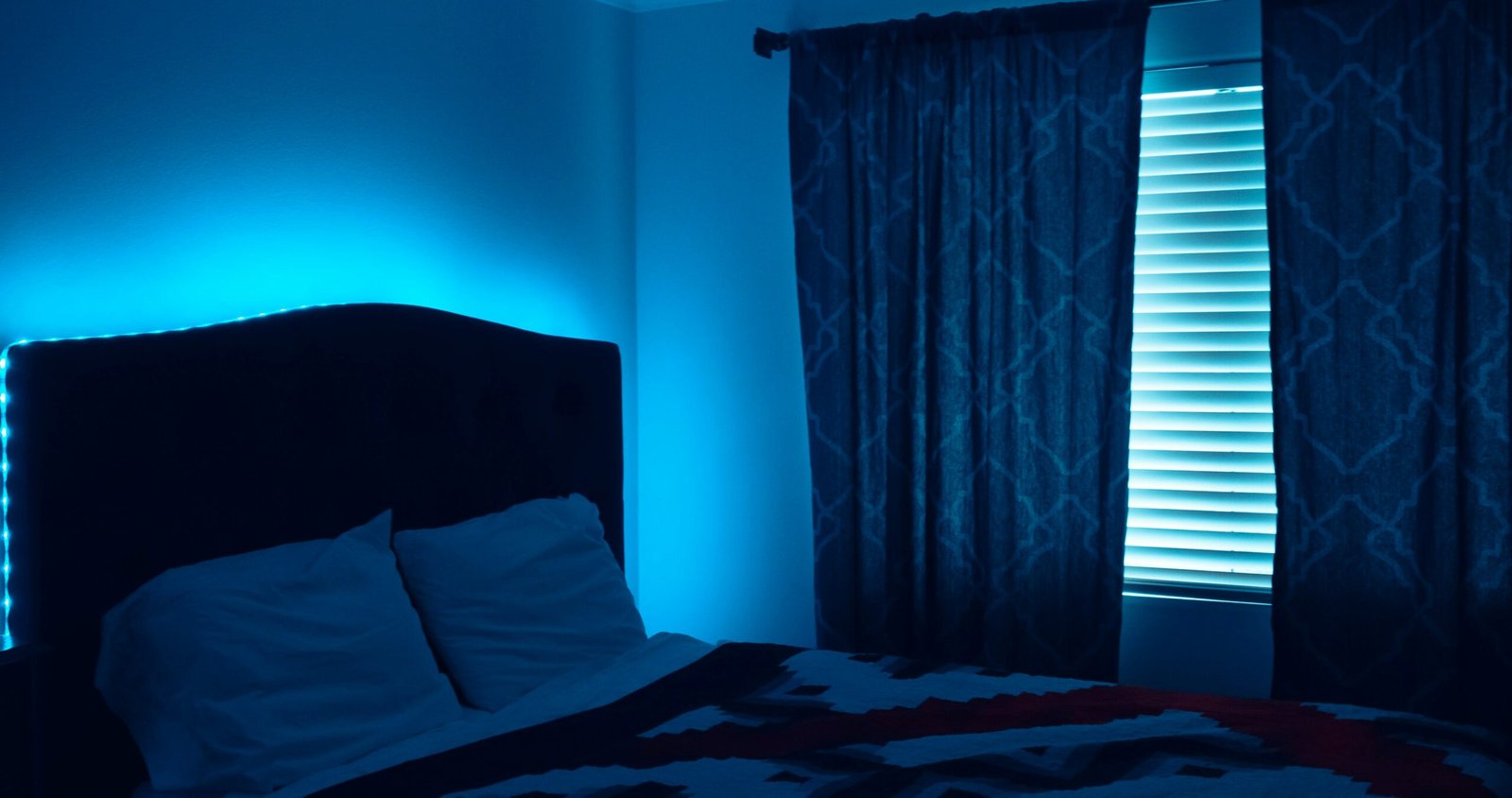
Why darkness matters in the first place
Your body keeps time with light. When darkness falls, the brain releases melatonin. Light reaching the eyes pushes that signal down — and the effect isn’t limited to bright light.
- A 2011 Harvard study (Gooley et al.) found ordinary room light before bed suppressed melatonin and shortened how long it was released compared with dim light.
- In a 2022 Northwestern experiment (Mason et al., PNAS), healthy adults who slept one night with moderate room light (~100 lux) had a higher heart rate overnight and more insulin resistance the next morning than those who slept in dim conditions.
The practical takeaway: you want your bedroom dark enough that your eyes aren’t getting a steady drip of light all night, and dark enough that morning light doesn’t wake you an hour too early. Both curtains and masks aim at that goal — they just attack it from different directions.
Blackout curtains: darkening the whole room
Blackout curtains use a dense weave or opaque backing to stop light through the fabric. Good ones block the vast majority of it. The key word is fabric. Much of the light that ruins a night sneaks in around the edges, over the rod, and through the bottom gap — and that’s where cheap curtains fail.
What curtains do well
- They darken the entire room, so you can move around without turning on a bright light.
- They help both people sharing a bed (and any pets that wake at dawn).
- Thicker types soften street noise a little and help with heat and cold.
- Nothing to wear, adjust, or remember to pack.
Where curtains fall short
- They only fix the windows. Hallway light, under-door gaps, and standby LEDs remain.
- They need proper fitting — a curtain that just covers the glass leaves bright halos.
- Higher upfront cost and installation hassle for some renters.
- They don’t travel with you.
For product picks and fitting details, see our full guide: Best Blackout Curtains for Bedrooms (2026).
Sleep masks: darkening just your eyes
A sleep mask darkens the only thing that needs it. Because it sits on your face, it doesn’t care whether the light comes from a window, a doorway, or your partner’s phone.
In hospital ICUs, randomized trials have found that eye masks combined with earplugs improved patients’ sleep and raised nighttime melatonin. ICU patients are not typical sleepers, so don’t overstate the result, but it supports the basic idea.
What masks do well
- Cheap ($10–$40) and work immediately.
- Travel anywhere: planes, hotels, bright guest rooms.
- Let you sleep on a different schedule from the person next to you.
- Work for daytime sleepers who can’t fully darken a room at noon.
Where masks fall short
- You have to wear it — some people can’t tolerate anything on their face.
- Straps can slip, press on the eyes, or cause headaches if too tight.
- Need regular washing.
- Do nothing for the room or for anyone sharing it.
Head-to-head comparison
| Factor | Blackout curtains | Sleep mask |
|---|---|---|
| Typical cost | $40–$200+ per window | $10–$40 |
| Darkness when well fitted | Very dark room (minus door/device light) | Very dark for your eyes, any light source |
| Fixes hallway or device light | No | Yes |
| Darkens room for a partner | Yes | No |
| Comfort | Nothing to wear | Depends on fit |
| Travel-friendly | No | Yes |
| Good for renters | Sometimes (liners, tension rods) | Yes |
| Insulation / noise | Some benefit | None |
Curtains are best for fixing a room you sleep in every night. Masks are best when you can’t control the room.
Which one should you choose?
- Home sleeper, same schedule as partner: Start with blackout curtains. Add a mask on the worst nights if needed.
- Partner on a different schedule: A mask is the quickest peace treaty.
- You travel often: Pack a contoured mask with a good nose seal.
- You rent: Blackout liners + tension rods, or a mask if drilling is off-limits.
- Night shift or daytime sleep: Use both. Daylight is bright and your clock is already working against you.
- Baby or young child: Blackout curtains only. Never put a sleep mask on an infant. Choose cordless coverings.
How to fit blackout curtains so they actually work
- Mount the rod 4–6 inches past each side of the window.
- Hang high — several inches above the frame or near the ceiling.
- Go long enough to skim or pool on the floor.
- Prefer wraparound/return rods when possible.
- Choose fullness (gathered or pleated) over a flat sheet look.
A mid-priced curtain hung well beats an expensive one hung badly. Full product guidance is in our blackout curtains guide.
How to choose a sleep mask you’ll keep wearing
- Nose seal first — the gap beside the nose is where most masks leak.
- Avoid eyelid pressure — contoured cups are better for many side sleepers.
- Wide, soft, adjustable strap — too tight causes headaches; too loose means it migrates.
- Breathable material you like (silk, soft cotton, bamboo).
- Give any new mask at least a week before deciding.
Using both — and the light sources people forget
Curtains and masks are layers, not rivals. A sensible setup is curtains for the room and a mask in the drawer for the nights something goes wrong.
Also hunt the smaller sources:
- Standby LEDs (chargers, TVs, routers) — cover with opaque tape or dimming stickers (never block smoke/CO alarms).
- Phone face-down or on Do Not Disturb.
- Door gap — draft stopper or rolled towel.
- Digital clocks with dimmable or red displays.
- If you need a night light, use dim, warm amber or red, placed low.
The morning-light trade-off
Morning light is a useful cue for alertness and for setting the next night’s sleepiness. A room that stays pitch dark until late can make waking feel hard and nudge your rhythm later.
Open the curtains or step outside soon after waking. A sunrise-simulating alarm is another option. Keep darkness for the main sleep window, then get bright light promptly.
FAQ
Do blackout curtains really improve sleep?
They can, mainly if light is actually disturbing you (streetlight, early sunrise, porch lamps). If the room is already dark, the benefit is small.
Are sleep masks safe every night?
For most healthy adults, yes. Keep the mask clean, avoid tight straps, and stop if you get irritation or headaches. People with eye conditions or recent surgery should ask their eye doctor first.
Can a sleep mask replace blackout curtains?
For your own eyes, often yes. It doesn’t darken the room for anyone else or help you move around safely in the dark.
Is total darkness necessary?
No. Avoid bright or steady light reaching your eyes. A dim, warm night light for safety is a reasonable compromise.
Key takeaways
- For most home sleepers, fix the room first with well-fitted blackout curtains.
- Choose a mask when you travel, share a different schedule, rent, or sleep by day.
- Where light is a real problem, use both.
- Fit beats fabric. Wide rods, high mounting, floor-length drops, and a snug nose seal make the difference.
- Don’t lose morning light — open the curtains or get outside soon after waking.
This article is for general information and is not medical advice. Last updated October 14, 2026.
Sources
- Gooley et al., 2011, Journal of Clinical Endocrinology & Metabolism
- Mason et al., 2022, Proceedings of the National Academy of Sciences
- Hu et al., 2015, Critical Care (ICU eye masks + earplugs)
- American Academy of Pediatrics / CPSC guidance on window cord safety