
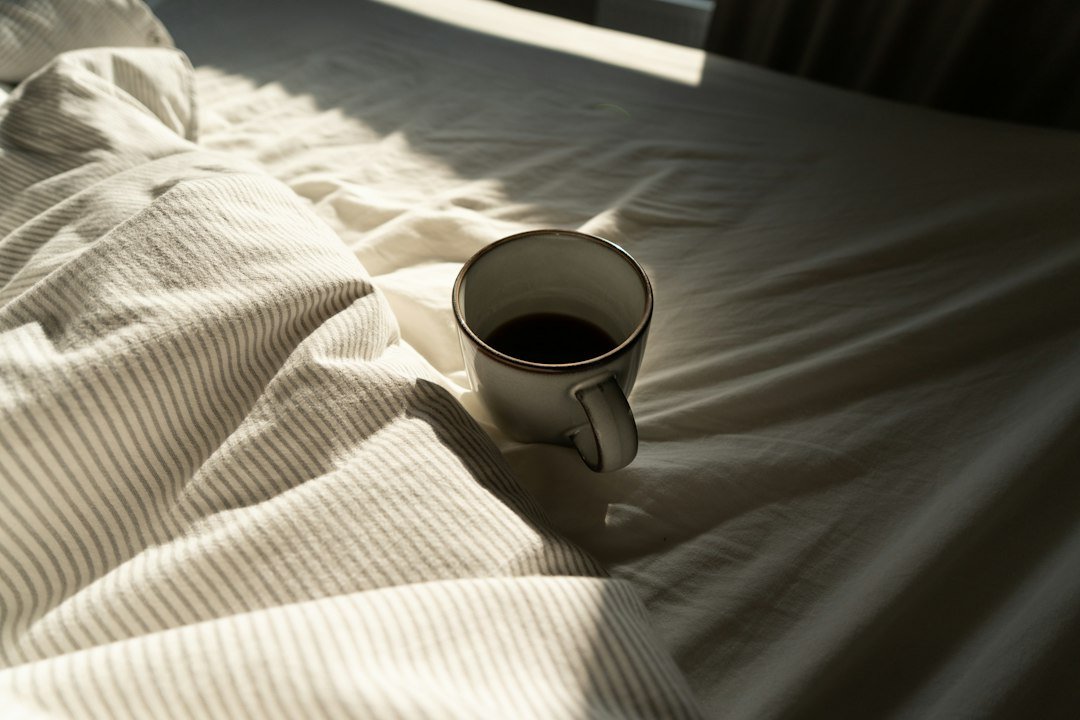
Quick answer: A coffee nap is a cup of coffee followed straight away by a nap of 15 to 20 minutes. Caffeine needs roughly 30 minutes to produce its alerting effect, so it arrives just as you wake. Small studies found the combination reduced sleepiness more than coffee or a nap alone.
This is one of the techniques in our Power Nap Guide. Here is how to do it properly and when to leave it alone.
What is a coffee nap?
A coffee nap, sometimes called a caffeine nap or stimulant nap, is a short nap taken immediately after caffeine. It sounds backward because we think of coffee as the thing that stops sleep. The trick is the delay between swallowing caffeine and feeling it.
How does a coffee nap work?
Two things make you sleepy in the afternoon: your body clock and a build-up of a chemical called adenosine, which accumulates in the brain the longer you are awake. Sleep clears adenosine. Caffeine blocks the receptors adenosine acts on.
After you drink coffee, the caffeine has to pass through the stomach and be absorbed before it reaches the brain. Its alerting effect begins around 30 minutes after drinking. A nap shorter than that is over before the caffeine interferes with it (The Conversation).
So you get two effects stacked: the nap lowers sleep pressure, and the caffeine switches on as you get up. Caffeine taken before sleep has also been shown in lab work to blunt the grogginess that follows waking (Van Dongen et al., 2001).
What does the research show?
The best-known evidence comes from sleep researchers Jim Horne and Louise Reyner at Loughborough University, who studied sleepy drivers in a car simulator.
- 1996: Ten sleepy volunteers took a 30-minute break between two monotonous one-hour drives. A nap under 15 minutes and 150 mg of caffeine each reduced driving impairments and sleepiness. A break with neither did not help (Horne and Reyner, 1996).
- 1997: Twelve sleepy volunteers combined 200 mg of caffeine with a nap under 15 minutes before a two-hour afternoon drive. Driving incidents fell to 9% of placebo levels with the combination, compared with 34% for caffeine alone. Naps that were only dozing still worked (Reyner and Horne, 1997).
These are small simulator studies of sleep-restricted people. They are a good reason to try the method, not proof it works for everyone.
How to take a coffee nap: step by step
- Time it for early afternoon. Caffeine stays in your system for hours, so finish before about 2 p.m. if you go to bed around 10 or 11.
- Drink it fast. One regular coffee or a double espresso, roughly 100 to 200 mg of caffeine. Iced or lukewarm is easier to finish in a few minutes.
- Lie down right away. Do not check your phone first. The clock is running.
- Set an alarm for 20 minutes. That gives you time to drift off and about 15 minutes of rest.
- Do not worry about real sleep. Quiet dozing with eyes closed was still effective in the research.
- Get up at the alarm. Move, get into bright light, and give it five minutes.
How much caffeine do you need?
The driving studies used 150 to 200 mg. A standard 8-ounce brewed coffee has roughly 80 to 100 mg, so that is one large cup or two small ones. The FDA cites 400 mg a day as an amount not generally associated with negative effects for most adults, and that total includes tea, cola, energy drinks, and chocolate (FDA).
Skip sugary coffee drinks. You want the caffeine, not a sugar swing.
Common mistakes
- Sipping slowly. A coffee that takes 20 minutes to drink leaves no window to nap.
- Napping too long. Past 20 minutes the caffeine is active and you risk deeper sleep and sleep inertia.
- Doing it late. A 4 p.m. coffee nap can still be working at bedtime. See how caffeine affects your sleep.
- Using it every day to cover short nights. It masks sleep debt. It does not repay it.
Who should skip coffee naps?
- People who are sensitive to caffeine or get jittery or anxious from it.
- Anyone who has trouble falling asleep at night.
- Anyone advised to limit caffeine, including during pregnancy.
- Children and teenagers.
A plain 10 to 20 minute nap gives most of the benefit with none of the caffeine. See how long a power nap should be.
Frequently asked questions
Do coffee naps actually work?
Small controlled studies say yes. In sleepy drivers, caffeine plus a short nap reduced errors more than caffeine alone.
How long should a coffee nap be?
Fifteen to 20 minutes. It needs to end before the caffeine takes effect, at around 30 minutes.
Can I use tea or an energy drink instead?
Yes, any caffeine source works in principle. Tea has less caffeine per cup, so the effect may be milder. Check the label on energy drinks for total caffeine and sugar.
What if I cannot fall asleep after drinking coffee?
Rest with your eyes closed. Dozing without full sleep was still effective in the 1997 study.
What is the best time for a coffee nap?
Early afternoon, around 1 to 2 p.m. That matches the natural dip in alertness and leaves time for the caffeine to clear before bed. More in Best Time to Nap.
Sources
- Reyner LA, Horne JA. Suppression of sleepiness in drivers: combination of caffeine with a short nap. Psychophysiology, 1997. PubMed
- Horne JA, Reyner LA. Counteracting driver sleepiness: effects of napping, caffeine, and placebo. Psychophysiology, 1996. DOI
- Van Dongen HP et al. Caffeine eliminates psychomotor vigilance deficits from sleep inertia. Sleep, 2001. PubMed
- The Conversation. Health Check: what are coffee naps and can they help you power through the day? theconversation.com
- U.S. Food and Drug Administration. Spilling the Beans: How Much Caffeine Is Too Much? fda.gov
Last reviewed November 2026. SleepWellSpace publishes research-based guides on sleep habits. This article is general information, not medical advice.