
If you’re reading this at 1 a.m. with a phone glowing in your face, I get it. Bad sleep is exhausting in a way that’s hard to explain to people who sleep well. Your mood dips, your focus disappears, and your coffee habit quietly doubles.
The good news is that most sleep problems come down to habits, timing, and environment — and all three can be changed. This guide walks through what sleep is, why it matters, and 12 practical ways to improve it, starting tonight.
A quick note: this article is for general education, not medical advice. If you snore heavily, stop breathing at night, or have struggled with sleep for months, please talk to a doctor.
Why Sleep Health Matters
Sleep isn’t downtime. While you’re out, your brain sorts memories, your body repairs tissue, and your hormones reset. Skimp on it and you feel it fast — through slower thinking, shorter patience, and stronger cravings for junk food.
Over the long term, poor sleep is linked with higher risks of heart problems, weight gain, low mood, and a weaker immune system. That’s why sleep health deserves the same attention as diet and exercise.
How Much Sleep Do You Actually Need?
Most adults need 7 or more hours per night, according to the CDC and the American Academy of Sleep Medicine. Teenagers need more — usually 8 to 10 hours.
Hours alone don’t tell the whole story. Sleep quality matters too. Eight restless, broken hours can feel worse than six deep ones. The goal isn’t just more time in bed — it’s better sleep inside that time.
12 Science-Backed Habits to Sleep Better
1. Keep a Consistent Sleep Schedule
Your body runs on an internal clock called the circadian rhythm. It loves routine. Going to bed and waking up at roughly the same time every day — weekends included — is one of the most effective changes you can make.
Try to keep your wake-up time within about an hour, seven days a week. Waking time matters more than bedtime because it anchors the whole clock.
2. Get Morning Sunlight
Light is the strongest signal telling your brain it’s daytime. Get outside within an hour of waking, even on a cloudy day. Ten to fifteen minutes is a solid start.
Morning light helps you feel alert now and sleepy at the right time tonight. If you work indoors, take your first coffee by a window or on the porch.
3. Set a Caffeine Cutoff
Caffeine has a half-life of roughly five to six hours, so that 3 p.m. latte is still partly active at bedtime. Many people sleep better when they stop caffeine at least 8 hours before bed.
You don’t have to quit coffee. Just move it earlier and see what happens over a week.
4. Cool Down Your Bedroom
Your body temperature naturally drops as you fall asleep. A cool room helps that process. Most sleep experts suggest roughly 65 to 68°F (18 to 20°C).
If you run hot, try lighter bedding, breathable sheets, or a fan.
5. Make the Room Dark and Quiet
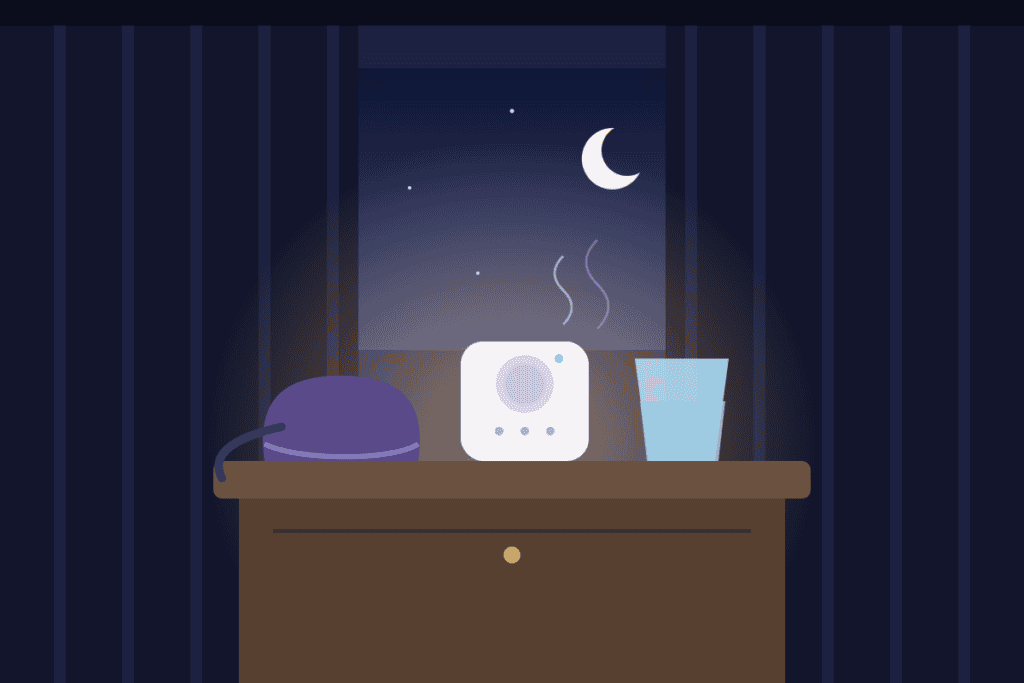
Even small amounts of light can affect sleep. Blackout curtains, a sleep mask, or covering tiny LED lights can make a real difference.
For noise, try earplugs or a steady background sound like a fan or white noise machine.
6. Build a Wind-Down Routine
You can’t go from full speed to sleep in one second. Give your brain a runway of 30 to 60 minutes. Dim the lights, put your phone down, and do something calm — reading, gentle stretching, a warm shower, or a bit of journaling.
The routine matters less than the consistency. Do the same few things each night and your brain will start to recognize the pattern.
7. Limit Screens Before Bed
Bright screens can delay your body clock, and the content itself — emails, news, social media — keeps your mind buzzing. Aim to put screens away 30 to 60 minutes before bed.
If that feels impossible, start with 15 minutes and build up. Lowering brightness and using night mode helps a little, but the bigger win is stopping the scroll.
8. Be Smart About Alcohol and Late Meals
Alcohol may make you drowsy, but it tends to fragment sleep later in the night. A heavy or spicy meal close to bedtime can also cause discomfort and reflux.
Try to finish large meals two to three hours before bed, and notice how you sleep on the nights you skip the evening drink.
9. Move Your Body During the Day
Regular exercise is linked with falling asleep faster and sleeping more deeply. A daily walk counts. You don’t need a gym membership.
Some people find intense workouts too close to bedtime make them wired. If that’s you, move your hard workouts earlier in the day.
10. Use Your Bed Only for Sleep
If you lie awake working, scrolling, or watching TV in bed, your brain starts to link the bed with alertness. Try keeping your bed for sleep (and intimacy) only.
If you can’t fall asleep after about 20 minutes, get up, do something quiet in dim light, and return when you feel sleepy. It sounds annoying, but it retrains the association.
11. Calm a Racing Mind
Many people lie down and suddenly remember everything they forgot to do. Try a “brain dump” earlier in the evening: write your to-do list and any worries on paper so your mind doesn’t have to hold them.
Slow breathing can help too. Try breathing in for four counts and out for six, repeated for a few minutes.
12. Invest in a Comfortable Setup
You spend about a third of your life in bed, so your mattress, pillow, and bedding matter. If you wake up sore or your mattress sags, it may be time for a change.
Don’t rush into a big purchase, though. Fix your habits first, then upgrade your gear.
Common Mistakes That Keep You Awake
- Checking the clock constantly — it raises stress and makes the night feel longer. Turn the clock away.
- Sleeping in too much on weekends — it shifts your body clock and makes Monday brutal.
- Napping too long or too late — keep naps to about 20–30 minutes and before mid-afternoon.
- Trying too hard to sleep — effort creates pressure. Aim to rest, and sleep often follows.
- Expecting instant results — habits usually take a couple of weeks to show a real effect.
A Simple 7-Day Plan to Get Started
Don’t try all 12 habits at once. Here’s an easy way in:
- Days 1–2: Fix your wake-up time and get morning light.
- Days 3–4: Set a caffeine cutoff and start a short wind-down routine.
- Days 5–6: Cool, darken, and quiet your bedroom.
- Day 7: Review. What helped? Keep it and add one more habit next week.
When to See a Doctor
Habits fix a lot, but not everything. Talk to a healthcare professional if you:
- Snore loudly, gasp, or stop breathing during sleep (possible sleep apnea)
- Feel unstoppable daytime sleepiness despite enough time in bed
- Have trouble sleeping at least three nights a week for three months or more
- Experience restless legs, sleepwalking, or acting out dreams
For long-term insomnia, cognitive behavioral therapy for insomnia (CBT-I) is widely recommended as a first-line treatment, and it often works better than sleeping pills over time.
Frequently Asked Questions
How can I fall asleep faster?
Keep a steady schedule, dim the lights an hour before bed, cut caffeine early, and use a calming routine. Slow breathing can also help you relax.
Why can’t I sleep even when I’m tired?
Common causes include stress, irregular schedules, late caffeine, bright screens, and a warm or noisy room. Being “tired but wired” often means your mind hasn’t wound down yet.
Is it bad to wake up in the middle of the night?
Brief awakenings are normal. It becomes a concern if you struggle to fall back asleep often or feel exhausted the next day.
Do sleep supplements like melatonin work?
Melatonin can help with certain issues, such as jet lag or shifted schedules, but it isn’t a cure-all. Check with a doctor or pharmacist before using any supplement.
How long does it take to improve sleep?
Many people notice small changes within a week or two, but building solid habits often takes several weeks.
Final Thoughts
Better sleep rarely comes from one magic trick. It comes from a handful of small, steady habits: consistent timing, morning light, a cool dark room, and a calm evening. Pick one or two from this list and start tonight.
Sleep well.
Sleep Basics
Struggling to sleep? Learn how to sleep better with simple, science-backed habits for your body clock, bedroom, evenings, and mornings.