

Most adults need 7 or more hours of sleep, and the habits that protect it are simple: keep your room dark, finish eating well before bed, wake at the same time every day, and take a warm shower 1 to 2 hours before lights out. This guide explains the research behind each habit, what it can and cannot prove, and how to try all of them over one week.
Key takeaways
- Darkness: One night of moderate room light (about 100 lux) raised heart rate and next-morning insulin resistance in a Northwestern study of 20 young adults.
- Meal timing: Eating close to bedtime is linked to poorer sleep. Aim to finish dinner about 2 to 3 hours before bed.
- Wake time: In a 61,000-person study, the most regular sleepers had up to 48% lower all-cause mortality risk than the least regular.
- Warm shower: A meta-analysis of 17 trials found the best timing is 1 to 2 hours before bed, in water of 40 to 42.5 °C (104 to 109 °F).
This article is educational and not medical advice. Talk to a doctor if you have a sleep disorder or a health condition.
Why sleep matters
The American Academy of Sleep Medicine and the Sleep Research Society recommend that adults sleep 7 or more hours per night on a regular basis to support optimal health (AASM consensus statement). Sleeping less than that regularly is linked to higher risks of obesity, diabetes, high blood pressure, heart disease, stroke and frequent mental distress, according to the CDC.
Many people fall short. A 2024 CDC survey found that 30.5% of U.S. adults sleep less than the recommended amount, a figure that has barely moved since 2020 (NPR via WFAE).
The first four habits below were shared by sleep and health experts in a popular social post titled “5 sleeping tips that changed our lives” (Dr Roger Seheult, Dr Rhonda Patrick, Dr Michael Breus and Dr Cheri Mah are named in the graphics). Social posts are summaries, so for each habit we checked the published research and note where the evidence is strong, where it is early, and where the claim goes further than the studies.
Habit 1: Make your bedroom as dark as possible
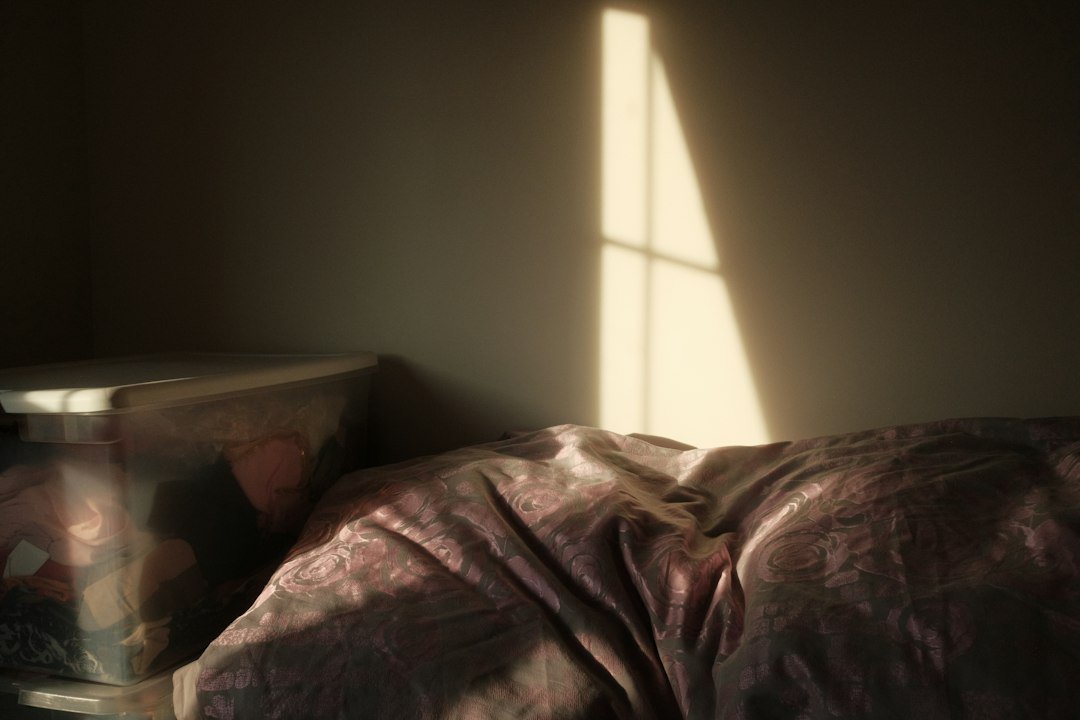
The claim: Dr Roger Seheult’s graphic says your room should be as dark as possible.
The evidence: Researchers at Northwestern University’s Feinberg School of Medicine had 20 young adults sleep for one night under moderate room light (100 lux) and compared it with a night in a dim room (under 3 lux). Under the brighter light, participants had a higher heart rate overnight, lower heart rate variability, and more insulin resistance the next morning. The study was published in PNAS in 2022, and senior author Dr Phyllis Zee advised people to avoid or minimize light during sleep.
Two details matter for how you use this:
- Participants did not report trouble sleeping, yet their bodies still responded. As Dr Zee put it, light during sleep affects you even when you are not aware of it (AARP).
- The study tested room-level light, not tiny sources such as a standby LED. Melatonin levels were similar across conditions, so the effect looks like it runs through heightened nervous-system alertness rather than melatonin alone. The idea that very small amounts of light matter is plausible but was not directly tested here.
What to do:
- Fit blackout curtains or shades, or wear a comfortable eye mask.
- Cover or remove glowing chargers, clocks and standby lights.
- Move your bed so outdoor light does not fall on your face.
- If you need a night light for safety, keep it dim, low to the floor, and amber or red rather than white or blue. These tips come from the Northwestern team (Safety+Health).
Habit 2: Finish eating about 3 hours before bed

The claim: Dr Rhonda Patrick’s graphic says not to eat less than 3 hours before bed, because late eating interferes with the body’s wind-down signals.
The evidence: This one is supported by observational data and small experiments, not by large trials. Observational studies link food intake close to the sleep period with poorer sleep quality. To test that, a randomized crossover study at Johns Hopkins moved healthy volunteers’ dinner from 5 hours before bed to 1 hour before bed in a lab and analyzed their sleep architecture (Nature and Science of Sleep, 2021).
The link is also visible in people with sleep problems. In a study of people with obstructive sleep apnea, late eaters had less REM sleep, took longer to fall asleep, woke more after sleep onset, and had more severe apnea than early eaters (Journal of Clinical Sleep Medicine, 2019).
The graphic explains the effect through the parasympathetic nervous system. We did not find a trial that proves that specific mechanism, so treat the 3-hour figure as a practical guideline rather than a proven threshold. Most sleep guidance lands in the 2 to 3 hour range.
What to do:
- Aim to finish dinner 2 to 3 hours before bed, and keep late meals lighter.
- If you are hungry closer to bedtime, choose a small snack rather than a full meal. Going to bed very hungry can also disturb sleep.
- Eat regular meals during the day so hunger does not push you toward large late-night portions.
Habit 3: Wake up at the same time every day
The claim: Dr Michael Breus’s graphic says a consistent wake-up time sets the clock for melatonin release, so your bedtime stabilizes naturally.
The evidence: This is the best-supported habit in the set. A 2024 study in the journal Sleep followed almost 61,000 UK Biobank participants, using wrist sensors that recorded more than 10 million hours of sleep, for an average of 6.3 years. People with the most regular sleep-wake timing had a 20% to 48% lower risk of all-cause death than the least regular, and sleep regularity predicted mortality better than sleep duration did (Windred et al.). The effect was strongest for cardiometabolic and cancer-related deaths (Stronger by Science).
To put numbers on “regular”: the most regular fifth of participants kept bed and wake times within about a one-hour window, while the least regular fifth varied across about three hours.
The limits: This is an observational study, so it shows an association, not proof that fixing your schedule extends your life. A commentary in the same journal family notes that no study has directly tested whether experimentally changing sleep regularity changes health outcomes. Duration still matters: people sleeping under 6 hours or over 9 hours had higher risk.
What to do:
- Pick a wake time you can keep seven days a week and set one alarm for it.
- Keep weekend wake-ups within about an hour of weekday ones.
- Get outside light soon after waking to reinforce the schedule (see Habit 5).
- Let your bedtime follow your wake time, rather than forcing yourself to sleep earlier.
Habit 4: Take a warm shower 1 to 2 hours before bed
The claim: Dr Cheri Mah’s graphic says not to shower straight before sleep, because a shower about 90 minutes earlier shortens the time it takes to fall asleep and deepens rest. (More on this in our guide to getting more deep sleep naturally.)
The evidence: A systematic review and meta-analysis from the University of Texas at Austin screened 5,322 records and analyzed 17 studies of warm baths and showers before bed. Water of 40 to 42.5 °C (104 to 109 °F) was linked to better self-rated sleep quality and sleep efficiency. When taken 1 to 2 hours before bedtime, even a 10-minute soak shortened the time to fall asleep, by about 10 minutes on average. The authors suggest the best timing is about 90 minutes before bed (Haghayegh et al., Sleep Medicine Reviews, 2019; Sci.News summary).
Why timing matters: The leading explanation is temperature. Your core body temperature naturally falls in the evening, and warm water pulls blood to the skin so you cool down faster afterward. Lead author Shahab Haghayegh said a bath only 15 minutes before bed was too soon to get the same effect, and that a cold shower can make sleep harder by warming the body (CNN via CBS News).
What to do:
- Shower or bathe in comfortably warm water, not scalding, for about 10 minutes.
- Finish roughly 90 minutes before your target bedtime.
- Save cold showers for the morning if you like them.
The meta-analysis pooled studies that varied widely in method, so treat the numbers as a good starting point and adjust to how you feel.
Habits 5 to 8: Four more habits worth adding
These four also have published research behind them.
Habit 5: Get outdoor light in the morning
A 2025 study in BMC Public Health surveyed 1,762 adults in Brazil. Each extra 30 minutes of morning sun (before 10 a.m.) was associated with a sleep midpoint about 23 minutes earlier and better scores on the Pittsburgh Sleep Quality Index. It found no link with total sleep time or time to fall asleep (study summary). Because it is cross-sectional and self-reported, it shows an association only. Try 10 to 30 minutes outside after waking, which also supports Habit 3.
Habit 6: Set a caffeine cutoff
In a small Journal of Clinical Sleep Medicine experiment led by Dr Christopher Drake, 12 healthy sleepers took 400 mg of caffeine (about two to three cups of coffee) 0, 3 or 6 hours before bed. Even the dose taken 6 hours before bed cut objectively measured sleep by more than one hour, and participants did not notice the loss on their sleep diaries. The authors suggested avoiding caffeine after about 5 p.m. for a typical bedtime (AASM). Sensitivity varies, so move your own cutoff earlier if you wake often.
Habit 7: Keep the bedroom cool
The Sleep Foundation recommends about 65 to 68 °F (15.6 to 20 °C), with around 65 °F (18.3 °C) as a common ideal, noting that personal preference varies by a few degrees. Core body temperature falls through the night, and a cooler room supports that drop. Warm rooms are associated with more awakenings and less slow-wave and REM sleep (Sleep Foundation). Pair this with the warm shower in Habit 4.
Habit 8: Put screens away before bed
In a randomized crossover study published in PNAS in 2014, 12 adults read from an iPad or a printed book for several hours each evening over five nights. After iPad reading they had lower melatonin, a delayed body clock, about 10 more minutes to fall asleep, less REM sleep, and more morning grogginess (Medical News Today summary). The sample was small, so build a screen-free wind-down of 30 to 60 minutes with dim light, reading a printed book, or gentle stretching.
A 7-night starter plan
Changing everything at once rarely sticks. Add one habit every night or two, keep what works, and track how you feel in the morning.
| Night | Add this habit | How to do it |
|---|---|---|
| 1 | Fixed wake time | Choose a time you can keep all week and set one alarm |
| 2 | Morning light | Spend 10 to 30 minutes outside within an hour of waking |
| 3 | Caffeine cutoff | Last coffee or tea by early afternoon, or at least 6 hours before bed |
| 4 | Meal timing | Finish dinner 2 to 3 hours before bed; keep any snack small |
| 5 | Warm shower | About 10 minutes in warm water, 90 minutes before bed |
| 6 | Dark, cool room | Blackout shades, cover LEDs, set the room near 65 to 68 °F (18 to 20 °C) |
| 7 | Screen-free wind-down | 30 to 60 minutes of dim light, a printed book or stretching |
After a week, note which changes made it easier to fall asleep or woke you less often, and keep those.
When to see a doctor
Habits help most with ordinary, short-term sleep trouble. Book an appointment if:
- Poor sleep continues for several weeks despite good habits.
- You snore loudly, gasp, or have pauses in breathing at night, which can signal sleep apnea.
- You feel very sleepy during the day or while driving.
- You rely on sleep aids, including supplements or cannabis products, most nights.
A doctor can look for sleep disorders and other causes. As one sleep specialist told NPR, there may be an underlying sleep disorder that is worth finding (NPR via WFAE).
Frequently asked questions
How many hours of sleep do adults need?
The AASM and Sleep Research Society recommend 7 or more hours per night for adults aged 18 to 60. Regularly sleeping under 7 hours is linked to higher health risks, and needs vary from person to person.
Is it bad to eat right before bed?
Eating close to bedtime is associated with poorer sleep quality, and in one study of people with sleep apnea, late eaters had more severe symptoms. A common guideline is to finish eating 2 to 3 hours before bed, with a small snack if you are hungry.
What is the best time to shower for sleep?
A meta-analysis of 17 studies found that a warm shower or bath 1 to 2 hours before bed, in water of 40 to 42.5 °C, works best. A bath only 15 minutes before bed was too close to bedtime to give the same effect.
Does sleeping in on weekends help?
A regular wake time is linked to better health outcomes than an irregular one. In a study of nearly 61,000 adults, sleep regularity predicted mortality risk better than sleep duration. Keeping weekend wake times within about an hour of weekdays is a practical target.
Does a dark room really matter if I sleep fine?
In the Northwestern study, people exposed to room light did not report sleep problems, yet their heart rate and next-morning insulin resistance still changed. That suggests darkness can matter even when you feel you sleep well.
Sources
- AASM and SRS consensus: adult sleep duration
- CDC: 1 in 3 adults don’t get enough sleep
- NPR via WFAE: Americans aren’t sleeping enough (2026)
- Northwestern Medicine: light exposure during sleep (PNAS, 2022)
- Windred et al., sleep regularity and mortality, Sleep (2024)
- Haghayegh et al., warm shower or bath before bed, Sleep Medicine Reviews (2019)
- Late dinner and sleep architecture, Nature and Science of Sleep (2021)
- Eating late and sleep apnea severity, Journal of Clinical Sleep Medicine (2019)
- Morning sunlight and sleep, BMC Public Health (2025)
- Caffeine 0, 3 or 6 hours before bed, Journal of Clinical Sleep Medicine (2013)
- Sleep Foundation: best bedroom temperature
- Chang et al., e-readers before bed, PNAS (2014), via Medical News Today
Photos via Unsplash: Sasun Bughdaryan, Kenneth Running, Emma Eriksson, Efe Kekikciler and engin akyurt.