

It’s 3:07 a.m. A siren starts far away, grows, peaks right outside your window, and fades. You were never fully awake, but you’re not really asleep anymore either. Your heart rate is up a little. The ceiling is suddenly very interesting.
Then, an hour later, a delivery truck reverses with that relentless beep. Then a dog. Then a door slam two floors up.
If you live in a city, share walls, or travel a lot, you’ve probably accepted this as the price of the postal code. You don’t have to. You can’t silence a city, but you can change how your bedroom handles it. This guide covers why urban noise does more damage than you’d think, how to blunt it with sound itself, and what to do to the room to help.
The Urban Sleep Penalty
Here’s the sneaky part: you don’t have to wake up to lose sleep quality.
Your brain keeps monitoring sound all night. When a loud or sudden noise hits, it can trigger a brief arousal—a jolt of activity that nudges you out of deep or REM sleep into a lighter stage. You usually won’t remember it. In the morning you just feel like you slept eight hours but woke up tired.
What the research shows, in plain terms:
- Noise during sleep triggers a stress response. Studies of nighttime noise, like aircraft and road traffic, link it to raised heart rate and blood pressure and elevated stress hormones, including cortisol, even when people don’t consciously wake.
- It’s the sudden stuff that hurts most. A constant hum is easier for the brain to ignore than irregular, unpredictable sounds like sirens, slammed doors, and motorcycles. Your hearing is built to react to change.
- The World Health Organization has long flagged nighttime environmental noise as a public health issue, with guidance suggesting average nighttime outdoor levels stay below about 40 decibels. Many city bedrooms regularly exceed that.
So if you’ve been told you “should be used to it by now,” that’s only half true. You can stop noticing the noise without your body ever stopping reacting to it.
Acoustic Masking: The Science of Sound Carpets
If you can’t remove the noise, you can change how it lands. That’s the idea behind acoustic masking.
The contrast gap
Imagine a silent bedroom with a quiet 30 dB baseline. A siren peaks at 70 dB. The jump—40 dB of contrast—is what your brain reacts to.
Now add a steady background sound at around 45 to 50 dB. The siren still happens, but the jump is much smaller, and part of the siren’s energy is covered by the sound already in the room. The nervous system treats it as less of a surprise, so you’re far less likely to get that micro-arousal.
Think of it as a sound carpet: a constant, even layer that sudden noises land on rather than crash through.
Why the type of sound matters
Not every sound makes a good carpet. Good masking sounds are:
- Steady. No sudden changes, no melody, no looping that your brain can anticipate and start tracking. Think constant rain, ocean, or a smooth noise rather than a music playlist.
- Broad. The sound should cover the frequencies of the noises bothering you. Low-frequency traffic rumble is best covered by deeper sounds like brown noise. Voices, beeps, and barking sit higher and respond better to white or pink noise.
- Comfortable. If you find it irritating, you’ll stay tense and defeat the purpose.
If you’re not sure which type suits your street, the brown vs white noise guide and the mixer at the end are built for exactly that.
DIY Room Soundproofing Hacks (That Won’t Wreck Your Budget)
Let’s be honest about what’s possible. True soundproofing means construction: decoupled walls, dense mass, sealed gaps. A renter isn’t doing that. But you can still reduce noise meaningfully, mostly by attacking the weak spots. Sound is a bit like water: it finds the gaps.
1. Seal the gaps first (the best value by far)
Air gaps leak sound disproportionately. In many apartments, the cheapest and most effective upgrades are the ones around openings.
- Door sweep or draft stopper. A gap under a bedroom door is one of the biggest leaks. A rubber door sweep costs a few dollars, and even a rolled towel is better than nothing.
- Weatherstripping around the door and window frames. Adhesive foam tape is cheap and removable.
- Check outlets and vents on shared walls. Small gaps matter more than you’d expect. Foam outlet sealers are inexpensive.
2. Add mass and softness to the windows
Windows are usually the weakest part of an exterior wall.
- Heavy, thick curtains. Look for dense, lined or “blackout” curtains, hung wide and floor-to-ceiling so they cover more than just the glass. They won’t be miraculous, but they’ll take the edge off higher-pitched noise.
- Window inserts. If you have a budget, acrylic or glass inserts that sit inside your window frame can cut noise noticeably, and many are removable for renters.
- Close the window fully and check the latch. It sounds obvious, but many windows don’t seal until they’re locked.
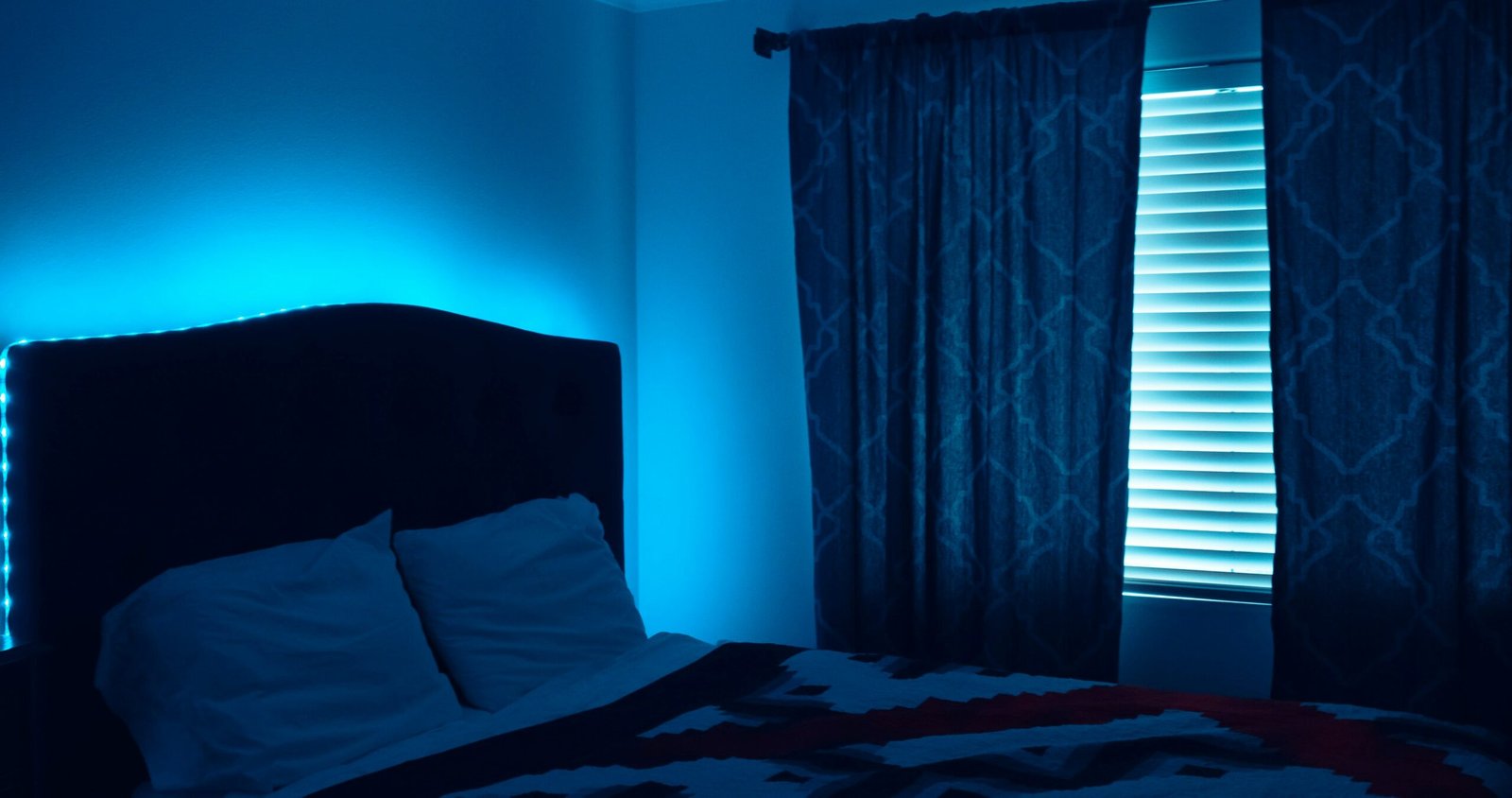
3. Soften the room
Hard, bare surfaces bounce sound around. Soft ones absorb it.
- Rugs, ideally with a pad underneath. This helps with both echo and noise from below.
- Bookshelves against shared walls. A full bookcase adds real mass and breaks up sound traveling through the wall.
- Upholstered furniture, wall hangings, and fabric headboards all help absorb sound inside the room.
4. Rearrange for distance
- Move your bed away from the noisiest wall or window if you can. Even a couple of feet matters.
- Avoid putting your head against a shared wall. Wall vibrations travel straight to you.
- Use the furniture as a buffer. A wardrobe or dresser against the noisy wall works better than an empty one.
5. Last-resort personal protection
- Earplugs. Soft foam or moldable silicone plugs are effective and cheap. They work best for sudden, loud noises. The trade-off is comfort, and some people can’t sleep with them.
- Sleep earbuds or headband headphones, designed for side sleepers, can double as a masking solution.
Realistically, these tricks combined might shave off a noticeable chunk of the noise. They won’t make the city disappear, which is where the next layer comes in.
Digital Sound Masking: Building an Acoustic Barrier Around Your Bed
Physical fixes reduce noise. Sound masking changes how your brain perceives what’s left. Used together, they work much better than either alone.
Set it up properly
A few details make a big difference:
- Match the sound to the noise. Rumbling traffic and trains: start with brown noise. Voices, dogs, and beeps: try white or pink. Mixed chaos: a blend usually works best.
- Keep the volume modest. The goal is just enough to soften the contrast, not to blast out the city. A level around that of a soft shower or quiet conversation is a sensible target. Louder is not better, and it isn’t good for your ears over eight hours.
- Place the speaker smartly. Put it a few feet from the bed. If your problem is noise from the window, placing the speaker near the window helps the masking sit between you and the source.
- Run it all night. Don’t use a timer that cuts out after 30 minutes. The 4 a.m. garbage truck doesn’t care that your playlist ended.
- Choose consistency over variety. Avoid sounds with sudden events (thunderclaps, birdsong, crashing waves with big peaks) if you’re sensitive to sudden changes. Smooth beats dramatic.
Give it a few nights
Your brain needs time to accept the new sound as part of the baseline. The first night can feel strange. By night four or five, many people find the background sound fades from awareness, and the noise outside starts to as well.
Put It Together: A Simple Plan for Tonight
- Seal the obvious gaps. Door sweep, window latch, towel if you must.
- Rearrange. Move the bed away from the noisiest wall.
- Start a sound carpet. Pick a steady background sound at a low-to-moderate volume.
- Keep a backup. Keep earplugs on the nightstand for the particularly rough nights.
- Give it a week, then adjust based on what still gets through.
Ready to Build Your Own Acoustic Barrier?
The fastest way to find the right sound for your street is to test it. Open the Sleep Sound Mixer on SleepWellSpace to try white, pink, and brown noise, blend them, and tune the mix to the noises you actually have to deal with.
The city isn’t going to quiet down. But your bedroom can get a lot more forgiving, and that’s often all your sleep needs.
This article is for general information and isn’t medical advice. If you have persistent trouble sleeping, talk with a healthcare professional.