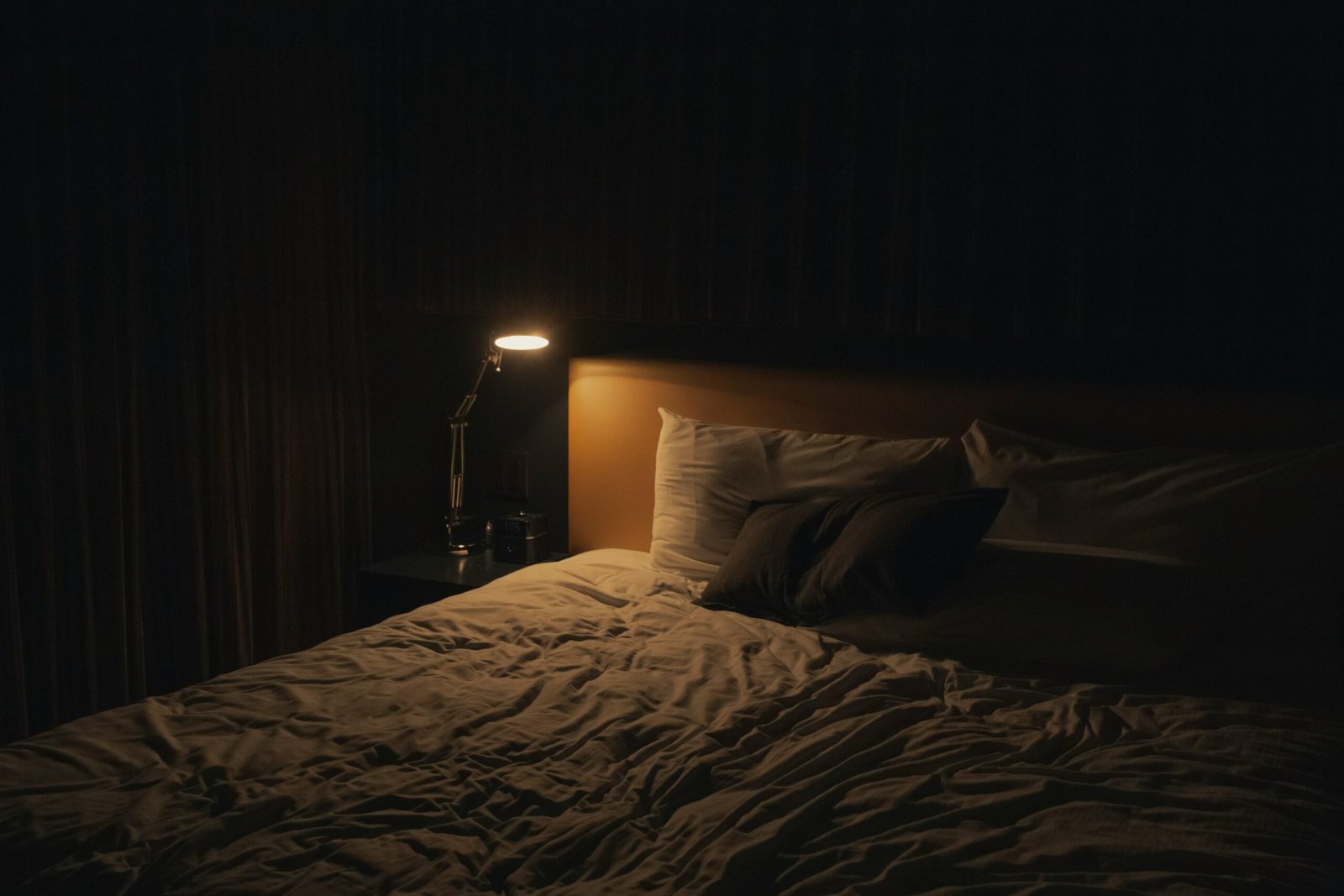
Quick answer: A good sleep environment is cool, dark, quiet, and comfortable. This free checker scores four areas — temperature, light, noise, and bedding — then points you to the highest-impact fixes you can make tonight.
Not medical advice. This is a practical planning tool, not a diagnosis or treatment for insomnia or other sleep disorders.
Ideal Sleep Environment Checker
Answer 8 quick questions. Get a score and what to fix first.
What a strong sleep environment looks like
Most adults sleep better when the room is cool, dark, and relatively quiet, and when the bed doesn’t fight their body. You don’t need a perfect setup — fixing the weakest link usually helps more than upgrading everything at once.
Temperature: many people do best roughly in the mid-60s °F (about 16–19°C), but comfort varies.
Light: even small amounts of light can make it harder to stay asleep for some people. Blackout options help.
Noise: steady soft sound is often easier than sudden spikes of silence broken by traffic or neighbors.
Bedding: support and breathability matter as much as “firm” vs “soft” marketing labels.
Quick answer: Most night noise problems come from a few sources — traffic, neighbors, thin walls, devices, or a busy mind. This free audit helps you name the main ones and points to simple fixes...
Quick answer: White, pink, and brown noise are steady background sounds with different frequency balances. White is brighter (static-like), pink is softer (rain-like), brown is deeper...